
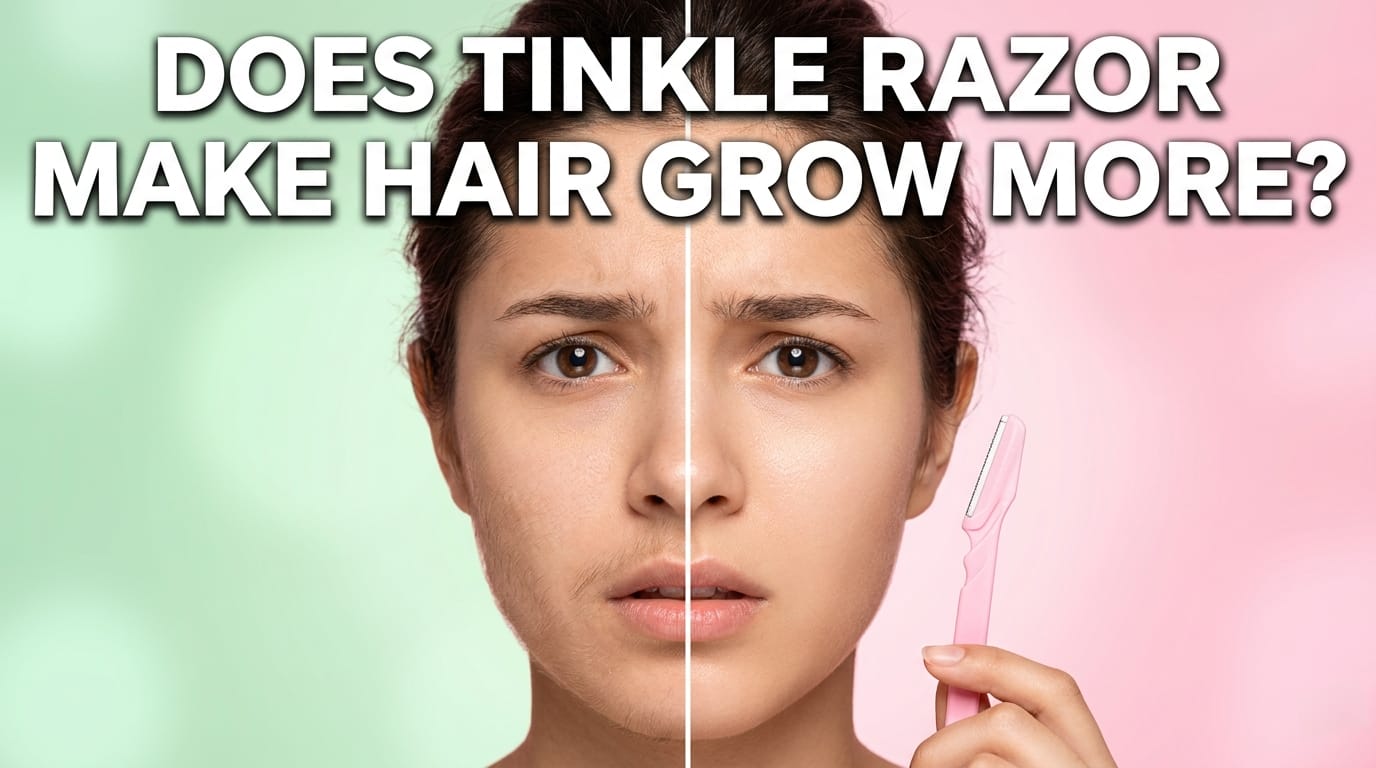
If you have ever mentioned face shaving to your mother or older sister, you probably received a very firm warning: do not do it, or the hair will come back darker, thicker, and impossible to manage. This belief is deeply rooted in South Asian households, and honestly, it has stopped a lot of women from trying a technique that is quietly popular all over the world. Dermaplaning — the professional term for facial hair removal using a blade — is a standard treatment at skin clinics globally, yet the stigma around the humble Tinkle razor at home is very real.
So today, we are putting the myth on the table and dealing with it honestly. Does facial hair actually grow back thicker when you shave? Is the Tinkle razor safe to use at home? And what is the right way to use it so your skin benefits rather than suffers? Let us go through everything clearly, without the fear-mongering.
Want more honest skincare guides like this? Join our WhatsApp channel for weekly tips
Table of Contents
ToggleThe Big Question: Does Hair Grow Back Thicker After Shaving?
The short answer is no — and this is not just an opinion. Dermatologists and skin researchers have studied this question for decades, and the conclusion is consistent: shaving does not change the structure, color, or growth rate of your hair. Not on your legs, not on your arms, and not on your face.
Here is the science behind it. Each hair on your face grows from a follicle that sits beneath the skin’s surface. The follicle determines everything about that hair — its thickness, its color, and how fast it grows. When you shave, you are only cutting the hair at the surface level. You are not going anywhere near the follicle. Since nothing about the follicle changes, nothing about the regrowth changes either.
What does change is the tip of the hair. Hair naturally grows with a tapered, fine end — which is why it looks soft and barely visible on your face. When you shave, you cut straight across the shaft, leaving a blunt edge. When that hair grows back, the blunt tip is what you feel first — and it can feel slightly more noticeable to the touch. But it is the same hair. The same thickness. The same color. It just does not have that tapered end anymore.
Dermatology fact: Shaving cuts hair at the surface only. Follicle depth, hair thickness, and regrowth speed are genetically determined — no blade can change them.
The myth persists because of how that blunt regrowth feels. When someone who has never shaved their face does it for the first time and then runs their fingers across their skin two weeks later, the stubble feels different from the soft vellus hair that was there before. The conclusion feels obvious — the hair is thicker. But it is an illusion created by the cut edge, not an actual change in the hair itself.
What Is the Tinkle Razor?
The Tinkle razor is a small, single-blade eyebrow shaping tool that has found a second life as a facial dermaplaning device. It was originally designed for precise brow grooming, but women quickly discovered that its fine blade and compact size made it ideal for removing the soft facial hair — often called peach fuzz or vellus hair — that sits on the surface of the skin.
It is inexpensive, widely available, and requires no special skills once you understand the technique. The blade is much gentler than a standard body razor, and when used correctly, it does not shave the skin aggressively — it glides across the surface to lift away both fine hair and the very top layer of dead skin cells. This dual action is what gives you that noticeable glow immediately after use.
You will find Tinkle razors sold in sets, usually in packs of three or more. Each razor can typically be used two to three times before it is time to replace it. Using a dull blade is one of the most common mistakes beginners make, and it is the main cause of irritation or uneven results.
Why Women Are Actually Using It
Beyond hair removal, the real reason dermaplaning has become so popular is what it does for the skin’s surface. Here is what consistent, careful use of the Tinkle razor can deliver:
- Instant brightness: Removing the layer of dead skin cells that accumulates on the face gives the complexion an immediate lift. Skin looks more awake and reflective within minutes of finishing.
- Smoother makeup application: Foundation and concealer sit completely differently on a freshly dermaplane’d face. There is no peach fuzz catching the product and creating that slightly fuzzy finish that many women notice in photographs.
- Better product absorption: Without the barrier of dead skin and fine hair, your serums and moisturizers absorb more deeply and work more effectively.
- Even skin texture: Regular use over several months can visibly improve the overall smoothness of your skin, especially if you have mild texture from past breakouts or sun damage.
- No chemicals: Unlike hair removal creams that contain strong depilatory chemicals, the Tinkle razor is completely chemical-free — a good option for those with fragrance sensitivity.
How to Use the Tinkle Razor Correctly
Technique matters enormously here. Done right, this is a five-minute routine with beautiful results. Done wrong, it can cause redness, small cuts, or irritation. Follow these steps carefully, especially the first few times.
Before You Start
- Cleanse your face thoroughly and pat it completely dry. The razor should never be used on wet or damp skin — it reduces control and increases the chance of nicks.
- Make sure you are using a brand new or nearly new blade. If the razor feels like it is dragging even slightly, replace it.
- Tie your hair back and work in good lighting, ideally near a window or a well-lit mirror.
The Technique
- Hold the razor at a 45-degree angle to your skin — not flat, not vertical. This angle is what makes the difference between a smooth glide and a rough scrape.
- Use your free hand to pull the skin in the opposite direction, creating a taut surface. This gives the blade a smooth, even area to work across and significantly reduces the risk of cuts.
- Use short, light, downward strokes. Work section by section — cheeks first, then jawline, then upper lip area and chin. Always stroke downward, in the direction the hair grows.
- Do not apply pressure. The weight of the razor itself is enough. Pressing harder does not improve results — it causes irritation.
- After each stroke, wipe the blade clean on a tissue or cotton pad before continuing. A clean blade performs far better than one clogged with hair and dead skin.
- Avoid the area directly around the eyes, active breakouts, open cuts, or any inflamed skin.
After You Finish
- Splash your face with cool water and pat dry gently with a soft towel.
- Apply a calming toner or rose water to soothe the skin — your clove toner from our previous guide works beautifully here.
- Follow with a gentle moisturizer. Your skin will absorb it more deeply than usual right after dermaplaning.
- Apply sunscreen if you are stepping outside. Freshly exfoliated skin is more sensitive to UV damage.
- Avoid heavy makeup, gym sessions, or anything that causes sweating for at least a few hours after.
Who Should Skip the Tinkle Razor
This technique is not for everyone, and that is completely fine. Avoid the Tinkle razor if:
- You have active acne, cystic breakouts, or inflamed skin. The blade can spread bacteria and worsen breakouts significantly.
- You have rosacea or extremely sensitive, reactive skin that flushes and irritates easily.
- You have used a retinol, tretinoin, or strong chemical exfoliant within the past week — combining these with physical exfoliation is too much for the skin barrier.
- You have open cuts, sunburn, or any broken skin on your face.
Frequently Asked Questions
Q: I tried it once and my skin felt rough after two weeks — does that mean the hair grew back thicker?
No. What you felt was the blunt edge of the cut hair as it grew back — not thicker hair. Run your finger across the skin after four to six weeks of full regrowth and you will notice the softness has returned. The hair itself has not changed.
Q: Can I use it if I have dark facial hair?
Technically yes, but this is worth thinking through. If you have dark, coarse terminal hair on your face rather than fine vellus peach fuzz, the Tinkle razor will remove it — but the blunt regrowth will be more visually noticeable on darker hair. For dark terminal hair, threading or waxing may give a better long-term result.
Q: My skin turned red after using it. What went wrong?
Redness usually means one of three things: the blade was dull, you applied too much pressure, or you went over the same area multiple times. Each pass of the blade should be a single, smooth stroke — not multiple swipes on the same spot. Allow the redness to settle, apply a calming aloe gel, and give your skin at least four weeks before trying again.
Q: How often should I replace the razor?
Each Tinkle razor blade is good for two to three uses maximum. After that, it is no longer sharp enough for a clean, controlled glide. Using a dull blade is uncomfortable and less effective — replace it regularly rather than stretching a single razor across too many sessions.
Q: Can I use the Tinkle razor on my upper lip?
Yes — with extra care. The upper lip is one of the most common areas women target. Use very short strokes, keep the skin taut, and work slowly. This area is slightly more sensitive, so be especially gentle with pressure.
Q: Will my skin look worse before it looks better?
Not if you follow the technique correctly. Unlike chemical peels that can cause a few days of peeling and redness, a well-done Tinkle razor session leaves skin looking better immediately. Any redness from your first attempt should settle within an hour or two.
Facial shaving is one of those skincare topics that gets more complicated than it needs to be, mostly because of myths that have been passed down without any real evidence behind them. The truth is straightforward: the Tinkle razor, used with the right technique, is a gentle and effective way to exfoliate the skin, remove fine hair, and get noticeably smoother, brighter skin — without changing your hair growth in any way.
Start slow, be patient with your technique, and give your skin time to adjust between sessions. Within a few months, you will have a clear sense of how your skin responds and what frequency works best for you.
Loved this guide? Follow our WhatsApp channel for more honest skincare tips every week
Have you tried the Tinkle razor? Share your experience in the comments — I would love to hear how it went for you.