
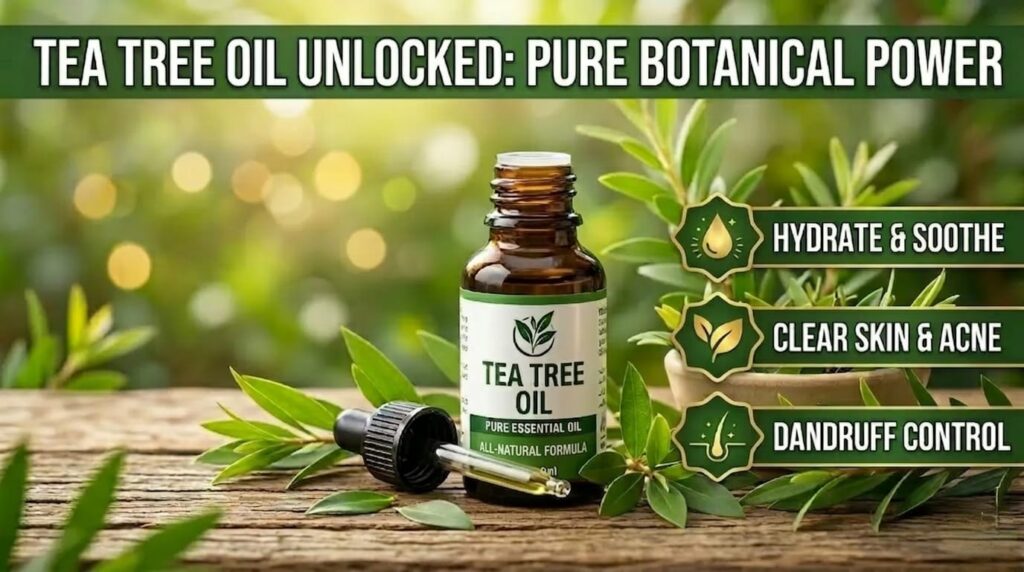
I have a confession. The first time I used tea tree oil, I put it directly on my face without diluting it. Within an hour my skin was red, burning, and angrier than before. I threw the bottle in a drawer and didn’t touch it for six months. Big mistake — because once I learned how to actually use it, tea tree oil became one of the most useful things in my skincare routine. If you’ve been curious about it, or if you’ve tried it and had a bad experience, this guide is for you. I’m going to keep it simple, honest, and practical
Join our WhatsApp channel for daily natural skincare tips!
Where Does Tea Tree Oil Come From?
Tea tree oil comes from a plant called Melaleuca alternifolia — a tree that grows in Australia. Aboriginal Australians have been using its leaves medicinally for centuries, crushing them and applying them to cuts and skin irritations long before anyone put it in a bottle and sold it at a pharmacy. What makes it work for skin is a compound it naturally contains called terpinen-4-ol. This compound has the ability to break down the outer layer of certain bacteria and fungi — essentially disabling them. It also has a natural calming effect on irritated, inflamed skin. A good quality tea tree oil will have between 30 to 48 percent terpinen-4-ol. When you’re buying it, check the label — the percentage matters.
The One Rule You Cannot Skip
Tea tree oil is an essential oil, which means it’s highly concentrated. Putting it directly on your skin can cause burns and blistering. I learned this the hard way. The safe amount for your face is 1 to 2 drops of tea tree oil mixed into 10 to 12 drops of a carrier oil like jojoba, sweet almond oil, or even your regular moisturizer. For your scalp, you can go slightly higher — up to 5 percent — but start low and see how your skin reacts.
Always do a patch test first. Put a tiny diluted amount on your inner wrist, wait 24 hours, and check for any reaction before putting it on your face.
Tea Tree Oil for Acne — Does It Actually Help?
Yes — but it depends on what kind of acne you have. For surface-level breakouts like whiteheads, blackheads, and those red inflamed pimples, tea tree oil genuinely works. It targets the bacteria inside the pore, reduces the redness around the spot, and with consistent use, helps prevent new ones from forming. For deep, painful cystic acne — the kind that lives under the skin and never comes to a head — tea tree oil alone is not enough. That type needs proper medical attention.
How to use it for acne:
After cleansing your face at night, dip a clean cotton bud into your diluted mixture and press it gently onto the spot. Leave it on overnight. Do not apply it all over your face — just the affected spots. Results start showing within a week of consistent use.
Tea Tree Oil for Oily Skin
If your face looks shiny an hour after washing it, tea tree oil can help. It has a gentle tightening effect on pores and reduces how much oil your skin produces without drying it out completely. A lot of products marketed for oily skin are so harsh that they strip your skin entirely — your skin responds by producing even more oil. Tea tree oil works differently. It cleans the pore without triggering that overproduction response.
How to use it:
Add 2 drops to your regular face wash and use it in your morning routine. Or mix it into a light moisturizer. Either way — diluted, always.
You can also try out these neem, honey and tea tree oil acne treatment mask as well.
Tea Tree Oil for Dandruff and Scalp
Most people don’t know this, but dandruff is usually not caused by dry scalp. It’s caused by a naturally occurring fungus on the scalp that sometimes overgrows and causes excessive flaking and itching. Because tea tree oil is antifungal, it directly targets this fungus and slows it down. Used consistently, it genuinely reduces flaking and the itching that comes with it.
How to use it:
Add 5 drops to a tablespoon of coconut oil, massage into your scalp before washing, leave for 20 to 30 minutes, then shampoo out. Do this twice a week and give it a month before judging results.
Tea tree oil is not for everyone. Some people are sensitive to it and develop contact dermatitis — redness, itching, and small bumps. This is why patch testing matters.
• Never swallow tea tree oil — it is toxic if ingested
• Avoid the area around your eyes completely
• If you have very dry or sensitive skin, start with the lowest concentration
• Pregnant women should consult their doctor before using it
How to Pick a Good One Tea Tree Oil
• 100% pure tea tree oil — no fillers, no added fragrance
• Terpinen-4-ol content between 30 and 48 percent — check the label
• Stored in a dark glass bottle — light degrades the oil over time
• Clear to very faintly yellow color — dark or murky means old or low quality
My Honest Take
Tea tree oil is not a miracle product. It won’t clear severe acne overnight or completely fix an oily skin type. But as part of a consistent routine — used correctly, diluted properly — it does what it promises.
The most important things: dilute it, patch test it, and be consistent. Give it at least 3 to 4 weeks before deciding if it’s working.
Follow our WhatsApp channel for more honest skincare guides!