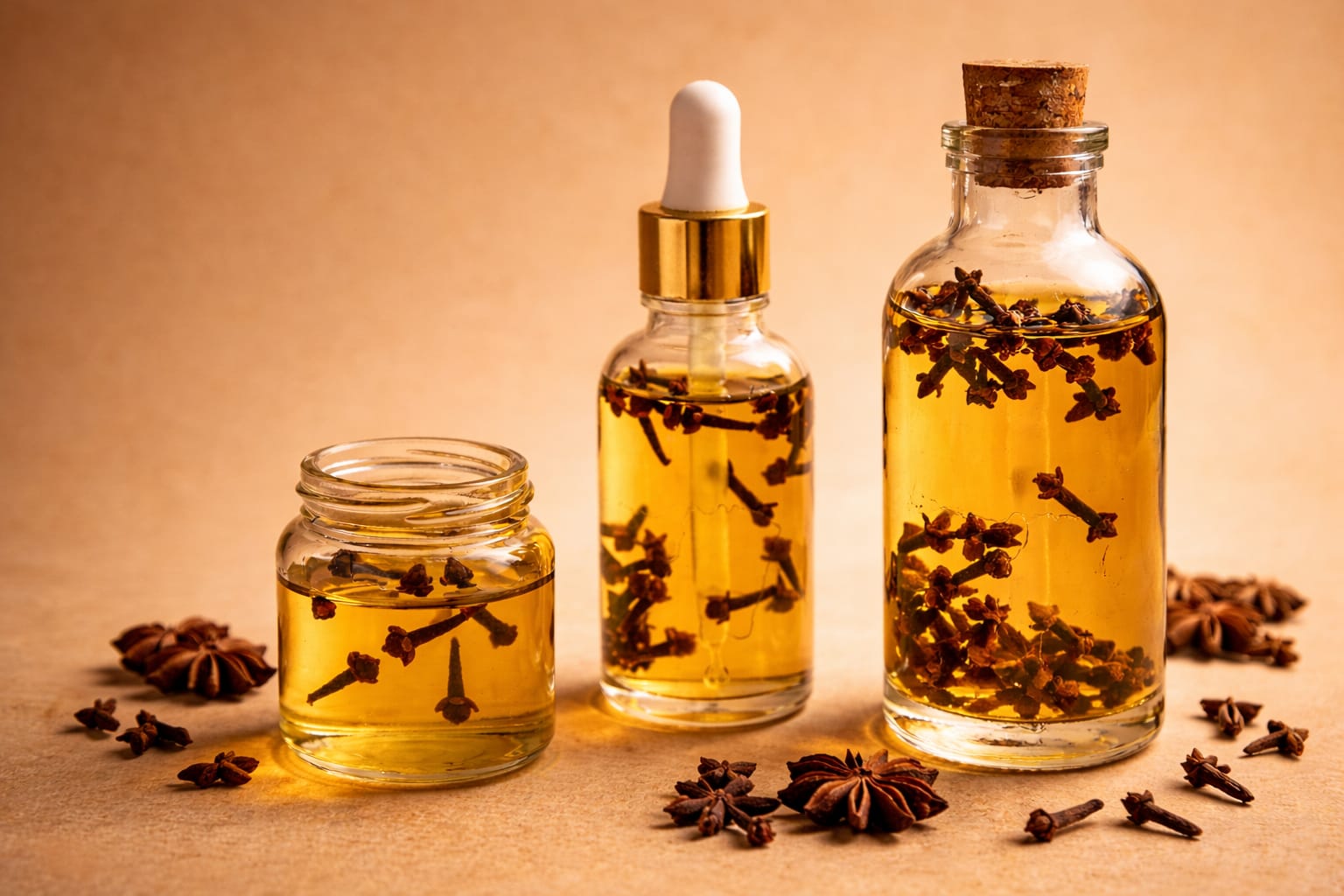
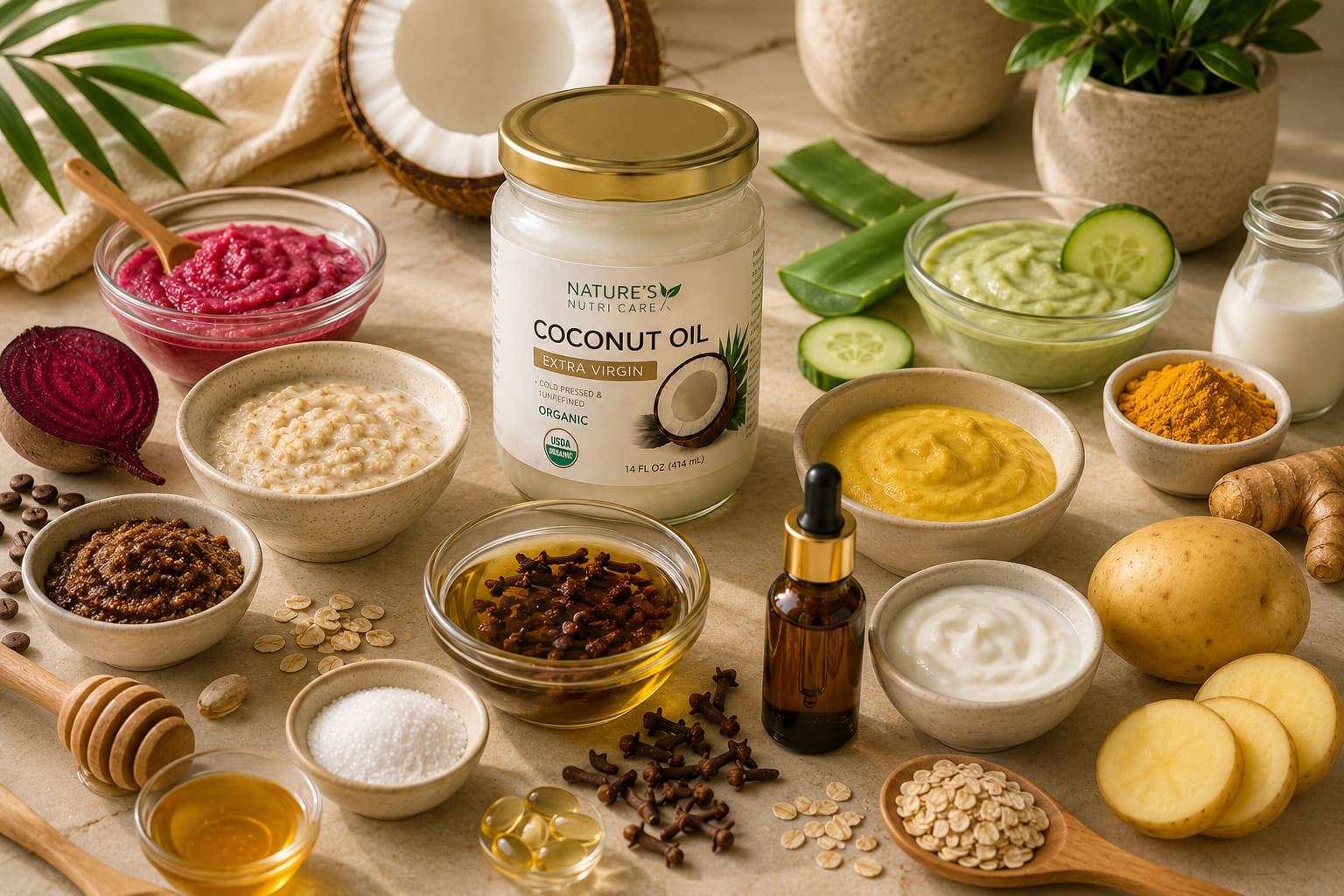
This guide walks through seven simple, kitchen-made coconut oil remedies for common skin concerns — from dry lips to a stressed-out skin barrier — along with how to patch test properly, how to store what you make, and who should think twice before trying coconut oil on their face at all.
Before using any new ingredient on your face, apply a small amount to your inner forearm or behind the ear. Wait 24 to 48 hours and watch for redness, itching, or bumps. If nothing happens, it’s generally considered reasonable to try a small area of the face next.
Coconut oil is rich, so more isn’t better. Most of these remedies are designed for 2 to 3 uses per week, not daily use, especially on the face.
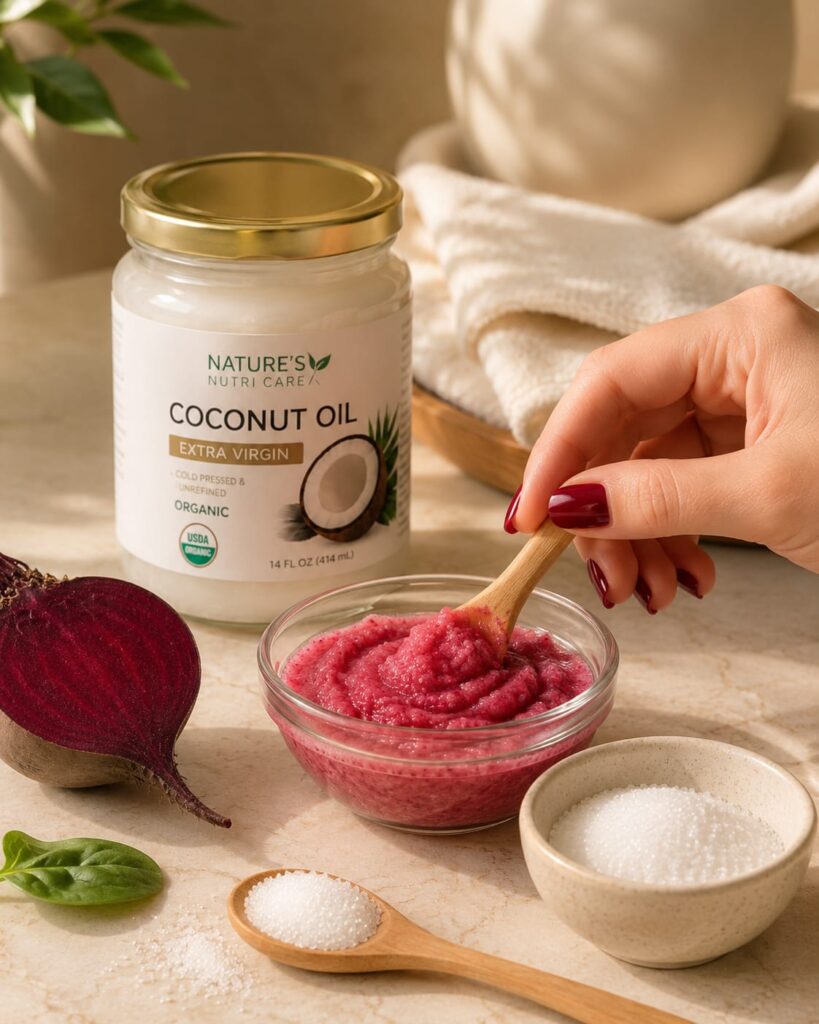
Remedy 1: Coconut Oil Sugar Lip Scrub
Ingredients
– 1 teaspoon virgin coconut oil
– 1 teaspoon fresh beetroot juice
– 1 teaspoon fine sugar
Step-by-Step Instructions
1. Grate a small piece of raw beetroot and press it through a fine strainer or cheesecloth to collect the juice.
2. In a small bowl, combine the coconut oil, beetroot juice, and sugar. Stir until the sugar is evenly coated.
3. Using clean fingertips, massage the mixture onto your lips in small circular motions for 30 to 60 seconds.
4. Leave it on for 2 to 3 minutes so the coconut oil can soften the skin.
5. Rinse with lukewarm water and pat dry.
6. Follow with a plain lip balm to seal in moisture.
How Often to Use: 1 to 2 times per week. Over-scrubbing can actually make chapped lips worse.
Storage: Make this fresh each time. Because it contains beetroot juice, it doesn’t keep well and can start to separate or smell off within a day, even refrigerated.
Tips: Beetroot juice may leave a light pink tint on the lips immediately after use — this is temporary and rinses off, but it also means this scrub is popular for an at-home “tinted lip” effect right before it’s rinsed.
Possible Side Effects: The sugar granules can be irritating if lips are cracked or bleeding — skip this scrub until the skin has healed. Beetroot can stain light-colored washcloths, so use a dedicated towel.
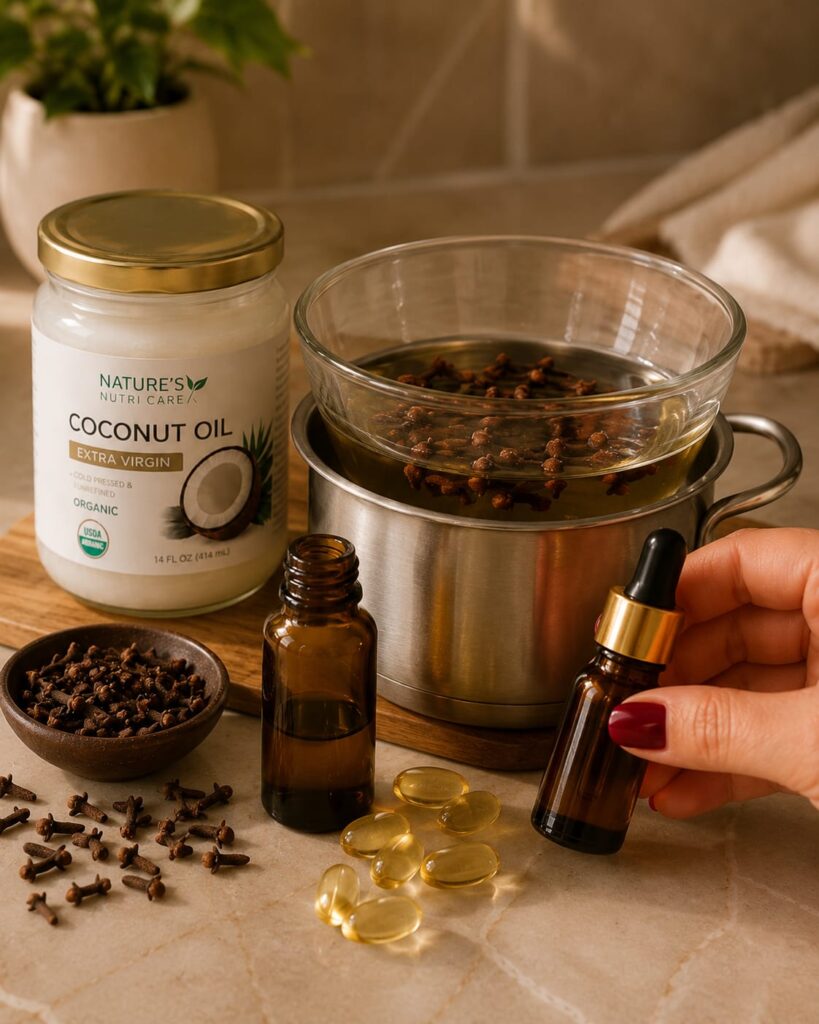
Remedy 2: Coconut Oil + Clove Anti-Aging Infused Oil
Best For: Mature-looking skin, the appearance of fine lines, dryness
Ingredients
– 2 tablespoons virgin coconut oil
– 4–5 whole cloves
– ½ teaspoon vitamin E oil
Preparation — Double Boiler Method
1. Place the coconut oil and whole cloves in a heat-safe bowl.
2. Set the bowl over a pot of gently simmering water, making sure the bowl doesn’t touch the water directly.
3. Let the cloves infuse gently for 10 to 15 minutes, stirring occasionally.
4. Remove from heat and allow the oil to cool completely to room temperature.
5. Strain out the whole cloves using a fine mesh strainer or cheesecloth.
6. Stir in the vitamin E oil.
7. Transfer to a dark glass bottle for storage.
Preparation — Direct Heat Method
1. Combine the coconut oil and cloves in a small saucepan over the lowest possible flame.
2. Heat for only 4 to 5 minutes, stirring constantly — cloves burn easily and can turn the oil bitter or scorched-smelling.
3. Remove from heat and let cool completely.
4. Strain out the cloves.
5. Stir in the vitamin E oil once cooled.
How to Apply
Use as part of a nighttime routine, after cleansing. Warm a few drops between your palms and massage gently into the face and neck for about 2 minutes using upward strokes. If your skin tolerates it well, you can leave it on overnight; otherwise, treat it as a 20-minute treatment and gently blot off any excess.
Weekly Use: 2 to 3 nights per week is a reasonable starting point — clove oil is a strong-smelling, concentrated infusion, and daily use isn’t necessary for most people. once your skin gets used to it, you can use it more regularly.
Storage: Store in a dark glass bottle away from direct sunlight and heat, ideally in a cool cabinet rather than a humid bathroom. Properly strained and stored, this infusion typically keeps for 2 to 3 months.
Safety: Always patch test before applying to the face — clove contains eugenol, a compound that can be irritating or sensitizing for some skin types, especially in higher concentrations. Avoid the eye area entirely. Discontinue immediately if you notice redness, burning, or stinging that doesn’t resolve quickly.
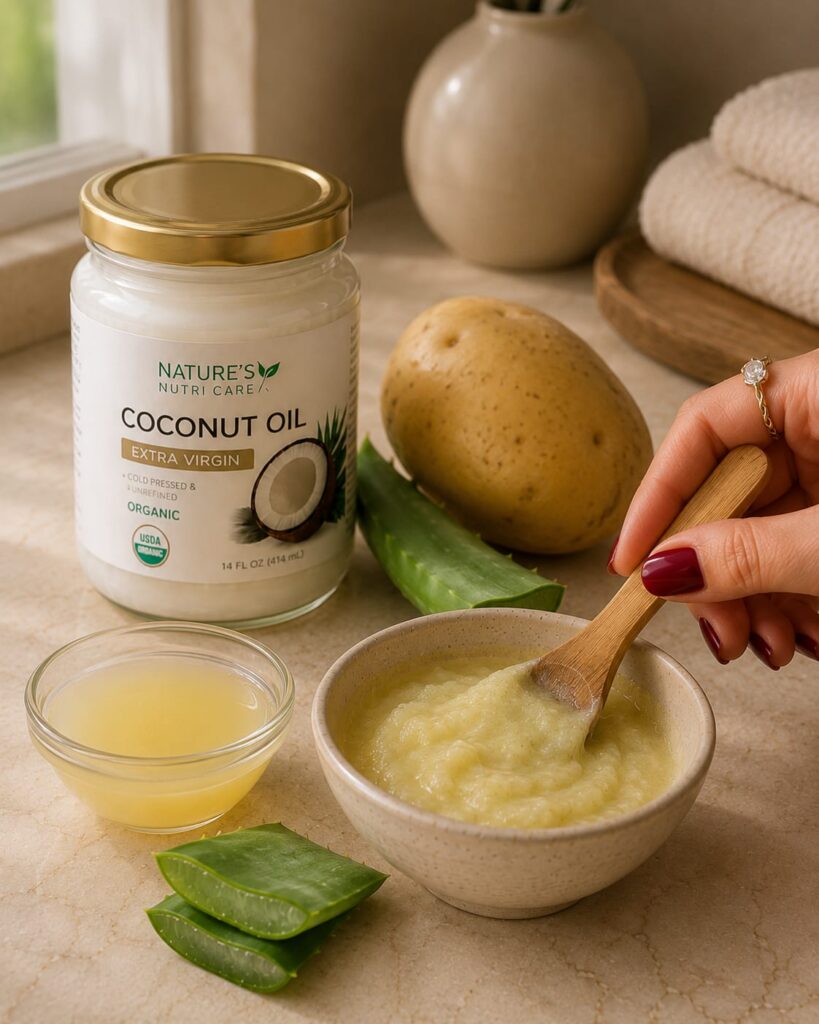
Remedy 3: Potato Juice + Coconut Oil + Aloe Vera Gel
Note: Instead of lemon juice, this recipe uses pure aloe vera gel. Lemon juice is phototoxic and can increase sun sensitivity or cause irritation on many skin types, so aloe vera is a gentler substitute for most people.
Best For: Uneven-looking skin tone, tan and dullness
Ingredients
– 1 tablespoon potato juice
– 1 teaspoon virgin coconut oil
– 1 tablespoon fresh aloe vera gel
Instructions
1. Peel and grate a small potato, then squeeze the gratings through cheesecloth to extract about a tablespoon of juice.
2. If using a fresh aloe leaf, slice it open and scoop out the clear inner gel, avoiding the yellow latex layer near the skin (this can be irritating).
3. Combine the potato juice, coconut oil, and aloe gel in a small bowl and mix well.
4. Apply an even layer to clean, dry skin, avoiding the eye area.
5. Leave on for 10 to 15 minutes.
6. Rinse with cool water and pat dry.
Frequency: 2 to 3 times per week.
Storage: Fresh use only — potato juice oxidizes and turns brown within a few hours, so this isn’t a make-ahead recipe.
Safety Tips: Potato juice is generally well tolerated, but always patch test, especially if you have sensitive skin. Discontinue if you notice any stinging beyond a very mild, brief tingle.
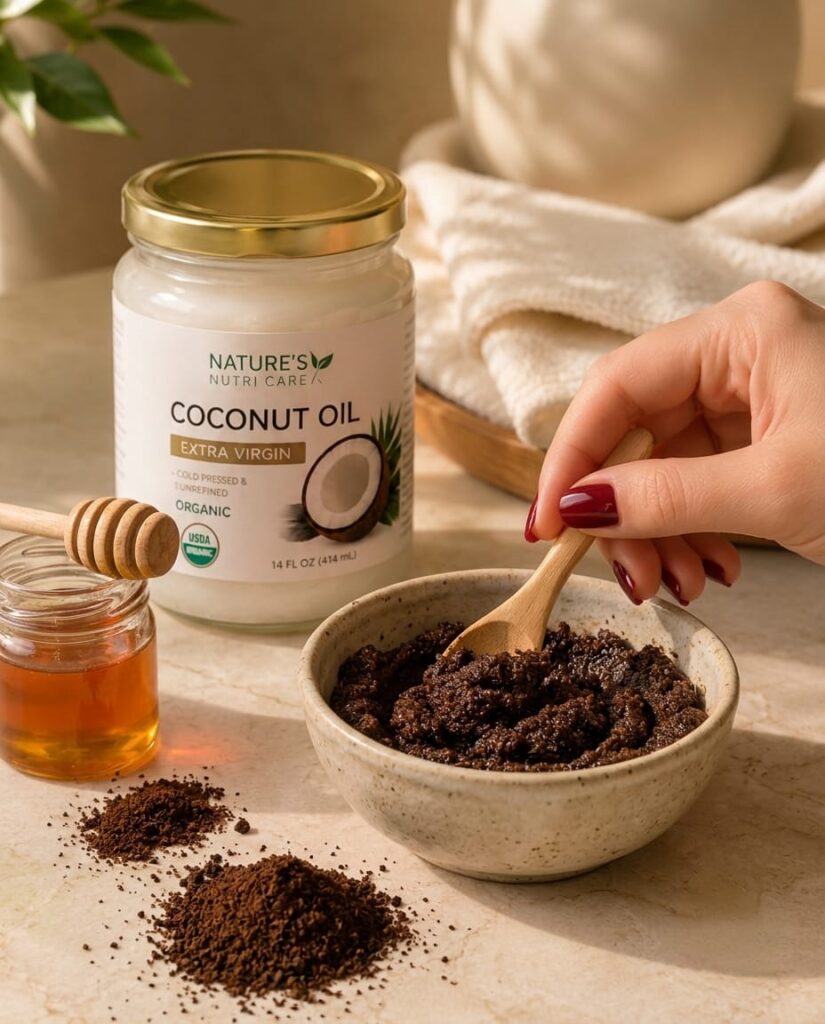
Remedy 4: Coffee + Coconut Oil + Honey Face Scrub
Best For: Rough texture, dull-looking skin, dry body areas like elbows and knees
Ingredients
– 1 tablespoon coffee grounds (used or fresh, finely ground)
– 1 teaspoon coconut oil
– 1 teaspoon raw honey
Instructions
1. Melt the coconut oil slightly if it’s solid — a few seconds of warmth from your hands is usually enough.
2. Combine the coffee grounds, melted coconut oil, and honey in a small bowl until you get a thick, spreadable paste.
3. Apply to damp skin using gentle circular motions, focusing on rough areas.
4. Massage for about a minute, avoiding any active breakouts or broken skin.
5. Rinse thoroughly with lukewarm water.
Frequency: 1 to 2 times per week on the face; up to 2 to 3 times per week on the body.
Storage: This scrub can be stored in an airtight container in the refrigerator for up to 3 days, since honey has natural preservative properties, but the coconut oil may need to be re-softened before use.
Tips: Coffee grounds are exfoliating, so use light pressure — this is a physical scrub, and pressing too hard can cause micro-tears, especially on facial skin.
Possible Side Effects: Not recommended for active acne, sunburned skin, or rosacea-prone areas, where physical exfoliation can increase irritation.
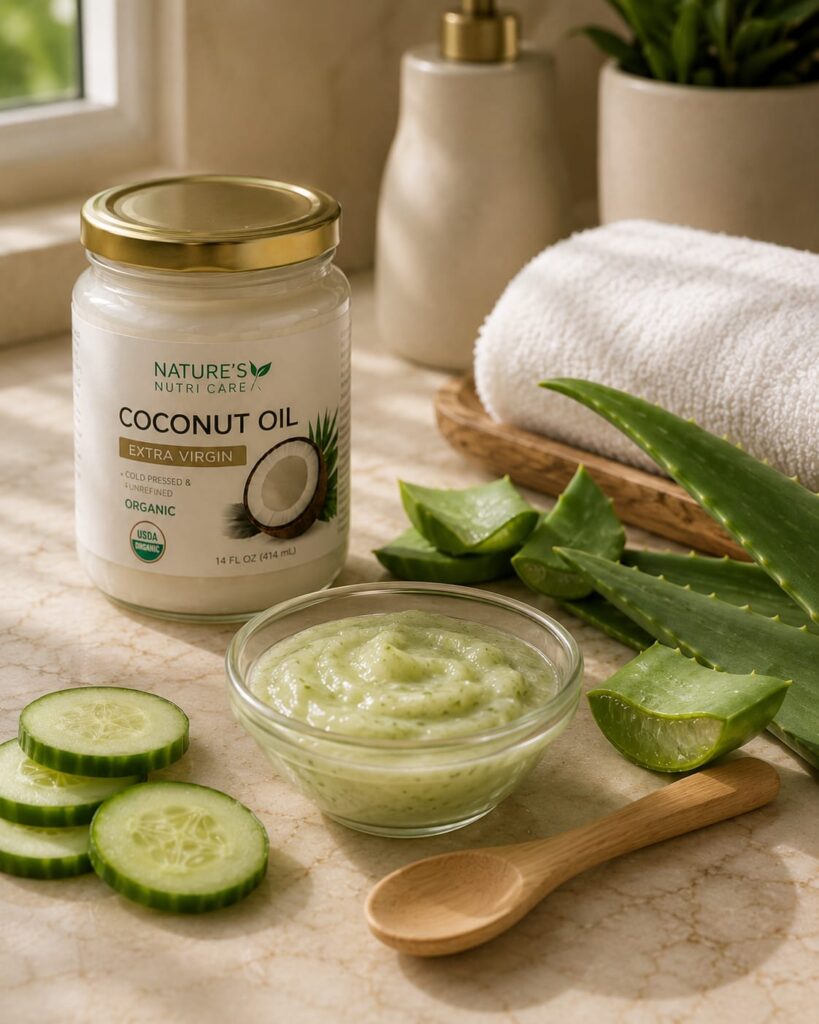
Remedy 5: Aloe Vera + Coconut Oil + Cucumber Gel Mask
Best For: Puffiness, mild dehydration, heat-stressed skin
Ingredients
– 2 tablespoons aloe vera gel
– 1 teaspoon coconut oil
– 2 tablespoons cucumber juice
Instructions
1. Peel and blend a small piece of cucumber, then strain to collect the juice.
2. Whisk the aloe gel, coconut oil, and cucumber juice together until fully combined (the mixture may look slightly separated — that’s normal).
3. Apply a thin, even layer to clean skin.
4. Relax for 15 to 20 minutes and let the mask absorb.
5. Rinse with cool water.
Frequency: 2 to 3 times per week, or as an occasional cooling treatment after sun exposure.
Storage: Keep refrigerated in a sealed container and use within 2 days. The cucumber juice breaks down quickly.
Tips: Chilling the finished mask in the fridge for 10 minutes before applying can add an extra cooling, de-puffing effect.
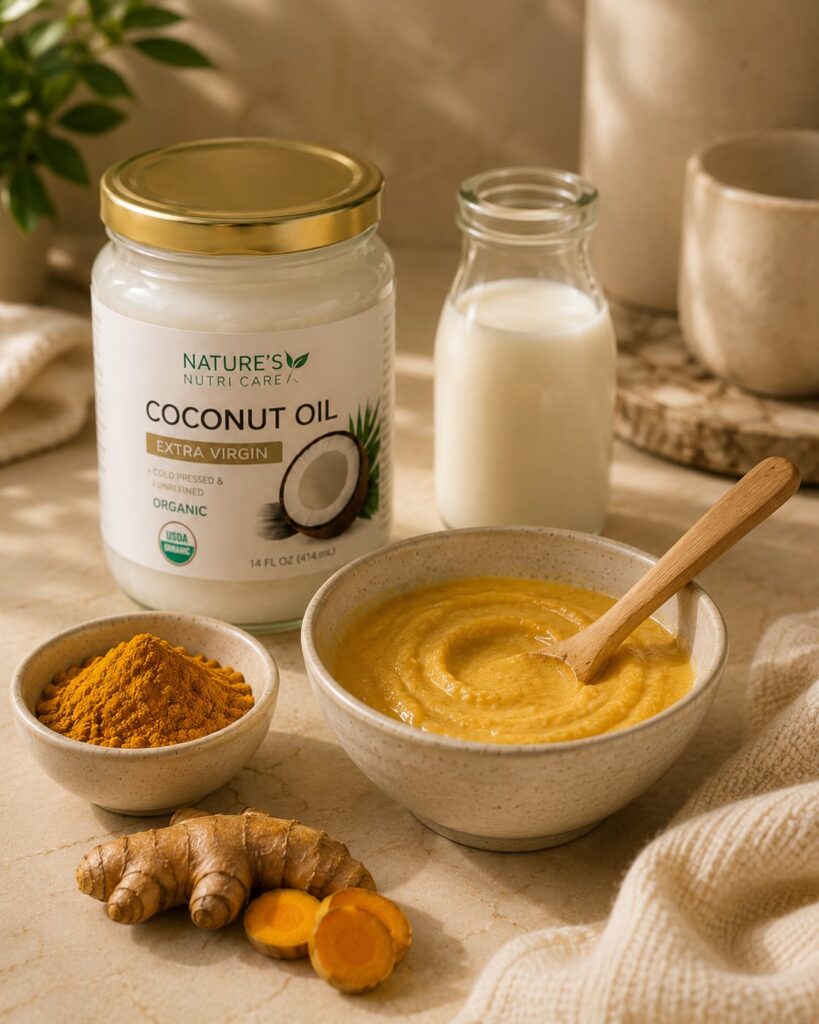
Remedy 6: Turmeric + Coconut Oil + Milk Face Mask
Best For: Dull-looking skin, uneven tone
Ingredients
– 1 teaspoon turmeric powder
– 1 teaspoon coconut oil
– 1 tablespoon milk (whole milk or a plant-based alternative)
Instructions
1. Mix the turmeric, coconut oil, and milk into a smooth paste.
2. Apply a thin layer to the face, avoiding eyebrows, hairline, and any light-colored clothing nearby.
3. Leave on for 10 minutes maximum — turmeric masks left on too long are more likely to stain the skin.
4. Rinse with lukewarm water, using gentle circular motions with a soft washcloth to help lift any residual color.
Frequency: Once a week is usually enough — turmeric is potent and more frequent use doesn’t necessarily add benefit.
Turmeric Staining Tips
– Apply a thin layer of plain coconut oil or petroleum jelly along the hairline before applying the mask, as a barrier.
– Rinse with a splash of milk or micellar water first if yellow staining remains, then follow with your regular cleanser.
– Avoid white towels and pillowcases on mask days.
– Any yellow tint that remains typically fades within a few hours as skin cell turnover continues.
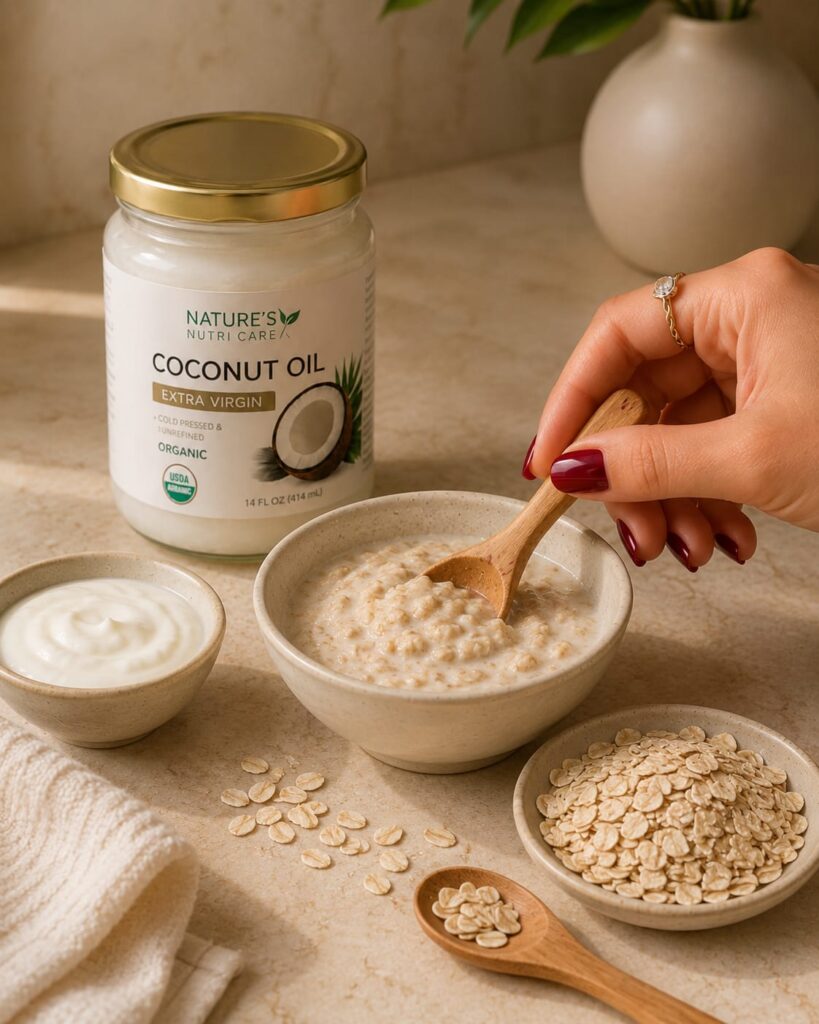
Remedy 7: Oatmeal + Coconut Oil + Plain Yogurt Barrier Mask
Best For: Dry skin, sensitive skin, a compromised or stressed skin barrier
Ingredients
– 1 tablespoon finely ground oats (colloidal or blended rolled oats)
– 1 teaspoon virgin coconut oil
– 1 tablespoon plain, unsweetened yogurt
Complete Recipe
1. Grind rolled oats in a clean coffee or spice grinder until they reach a fine, flour-like texture.
2. Combine the ground oats, coconut oil, and yogurt in a bowl, mixing until you get a smooth, spreadable paste. Add a few drops of water if it feels too thick.
3. Apply an even layer to clean, dry skin, avoiding the eye area.
4. Sit back and relax for 10 to 15 minutes while the mask sets.
5. Rinse gently with lukewarm water, massaging in small circles to allow the oats to lightly exfoliate as you rinse.
6. Pat skin dry and follow with a fragrance-free moisturizer.
Frequency: 2 to 3 times per week — this is one of the gentler recipes on this list and is generally well suited to more frequent use than the exfoliating scrubs.
Benefits: Oats contain compounds called beta-glucans and avenanthramides, which are traditionally used for calming and soothing dry, irritated-feeling skin. Plain yogurt contains lactic acid, a mild alpha-hydroxy acid, along with proteins and fats that may help support a compromised-feeling skin barrier alongside the coconut oil’s moisturizing properties.
Storage: Because of the dairy content, this mask should be made fresh or stored in the refrigerator for no more than 24 hours.
Safety: Those with a dairy or oat allergy should skip this recipe. As always, patch test first, particularly if your skin barrier is already compromised or irritated.
Side Effects & Who Should Avoid Coconut Oil
Acne-prone skin: Coconut oil’s comedogenic rating means it’s more likely than many other oils to contribute to clogged pores and breakouts.
Very oily skin: The heavy, rich texture can feel greasy and may increase shine throughout the day.
Coconut allergy: True coconut allergies are uncommon but real — anyone with a known tree-nut or coconut allergy should avoid topical use entirely and consult a doctor.
Sensitive skin: Sensitive skin can react to coconut oil itself, or more commonly, to added ingredients like citrus, clove, or turmeric in DIY recipes.
Children: Children’s skin is thinner and more reactive than adult skin. Check with a pediatrician before using any DIY remedy, especially those with active ingredients like clove or turmeric.
Frequently Asked Questions
1. Can I apply coconut oil every day?
For very dry body skin, many people use it daily without issue. For the face, most dermatologists suggest starting with 2 to 3 times a week to see how your skin responds before increasing frequency.
2. Does coconut oil clog pores?
It can. Coconut oil has a comedogenic rating that’s higher than many other natural oils, so it has a greater tendency to clog pores, particularly on acne-prone or oily skin.
3. Is virgin coconut oil better than refined?
For skincare purposes, most sources recommend virgin or extra-virgin coconut oil, since it retains more of the natural antioxidants and hasn’t been processed with heat or chemicals.
4. Can I leave coconut oil on my face overnight?
Some people do, especially for very dry skin, but it’s not recommended for acne-prone or oily skin types, since the extended contact time increases the chance of clogged pores.
5. Can I use coconut oil around my eyes?
It’s generally considered safe for the delicate under-eye area in small amounts, though the eyelids themselves can be more prone to milia (small white bumps) with regular oil use — apply sparingly.
6. Is coconut oil good for wrinkles?
Coconut oil may help improve the appearance of dry, fine-line-prone skin by boosting surface hydration.
7. How long should I leave these masks on?
Most of the masks in this guide are designed for 10 to 20 minutes. Leaving a mask on longer doesn’t necessarily improve results and can increase the risk of irritation, especially with active ingredients like turmeric or clove.
8. Can I use coconut oil if I have acne?
It’s generally best avoided on active acne or acne-prone areas, since it can contribute to clogged pores. A lighter, non-comedogenic oil is usually a better fit for acne-prone skin.
9. How should I store DIY coconut oil remedies?
Anything containing fresh produce, dairy, or juice should be refrigerated and used within a few days. Oil-only infusions, like the clove oil, can be stored at room temperature in a dark glass bottle for a few months.