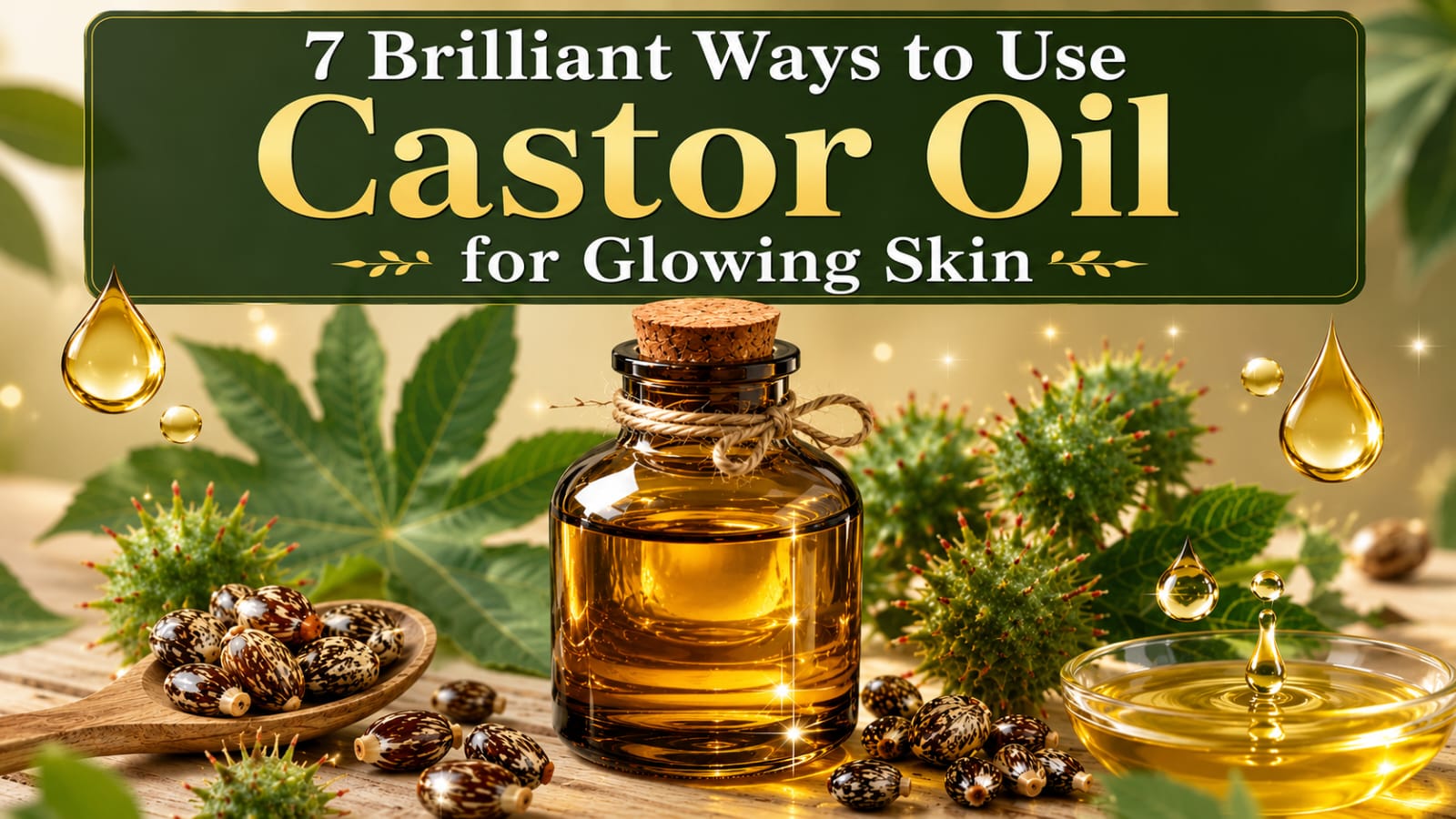
Castor oil is that thick, golden oil sitting in almost every DIY skincare cabinet and for good reason. It’s packed with fatty acids, especially ricinoleic acid, which is known for its moisturizing and soothing properties. That’s why it shows up in so many homemade beauty routines, from lip masks to face oils. One thing to know before you start: castor oil is very thick and sticky on its own.
For most face and skin uses, it works best when mixed with a lighter carrier oil. Jojoba oil is usually the top pick because it’s gentle and closely matches your skin’s natural oils, but grapeseed oil, sweet almond oil, and coconut oil can all work too, depending on your skin type.
Ready to get into it? Here are 7 of the best beauty hacks using castor oil, plus simple DIY recipes you can try tonight.
Disclaimer:
Castor oil is incredibly rich and thick.
While natural remedies are generally safe, always
perform a 24-hour patch test on a small area of
skin before trying a new DIY recipe, and consult
your dermatologist if you have acne-prone skin
Castor Oil for Dry Skin
Dry skin often means your skin barrier needs a little extra help holding onto moisture. Castor oil’s thick, emollient texture can create a protective layer on the skin that helps lock in hydration, which is why it’s a popular pick for dry patches.
DIY Recipe for Dry Skin
- 1 teaspoon castor oil
- 2 teaspoons jojoba oil (best carrier oil for this use)
- 2–3 drops vitamin E oil (optional)
- Mix everything in a small glass bottle and shake well.
How to apply: Warm a few drops between your palms and press gently onto damp skin after a shower. This helps the oil absorb better instead of just sitting on top.
How often: 3–4 times a week is a good starting point. Daily use is fine too if your skin tolerates it well.
Join Our WhatsApp Channel for Daily Beauty Tips
2. Castor Oil for Dry Elbows, Knees & Cracked Heels
These rough spots don’t have oil glands like the rest of your body, so they dry out fast. Castor oil’s thickness is actually a plus here — you want something heavy duty that stays put.
Simple DIY Recipe: Rough Patch Balm
- 1 tablespoon castor oil
- 1 tablespoon coconut oil (melted)
- Combine and store in a small jar at room temperature.
Night treatment: Rub a generous amount onto elbows, knees, and heels before bed, then cover with socks or wrap in a soft cloth. Wake up to noticeably softer skin.
Tip: For extra cracked heels, gently exfoliate with a pumice stone first so the oil can sink in deeper.
3. Castor Oil for Cracked & Plump Lips
Lips dry out faster than the rest of your face because they don’t have oil glands and are constantly exposed to air, wind, and licking (yes, that makes it worse). Castor oil for lips is a favorite DIY trick because it coats and conditions without feeling waxy.
DIY Lip Treatment
- 1/2 teaspoon castor oil
- 1/2 teaspoon shea butter or coconut oil
- 1 drop honey (optional, for extra softness)
- Warm slightly and mix until smooth.
Overnight Lip Mask Recipe:
Apply a thick layer before bed and leave it on overnight. Your lips absorb moisture better while you sleep, so this is the best time for a deep treatment.
How often: Overnight mask 2–3 times a week; a light layer as a daytime lip balm can be used daily.


4. Castor Oil for Eyelashes & Eyebrows
This is one of the most searched castor oil uses, and it’s important to be realistic about it. Castor oil doesn’t have strong scientific backing for making lashes or brows grow faster or longer. What it can do is condition the hairs, coat them so they look fuller, and possibly help reduce breakage from brittle strands. Think of it as a conditioning treatment rather than a guaranteed growth serum.
DIY Lash & Brow Serum Recipe
- 1/2 teaspoon castor oil
- 1/2 teaspoon jojoba oil
- Store in a small clean bottle with a spoolie or clean mascara wand.
Safe application:
Wash your face and remove all eye makeup first
Use a clean spoolie to brush a thin layer onto lashes and brows
Avoid getting oil directly into the eyes
Safety tips:
Do a patch test on your inner arm first
Stop use if you notice redness, itching, or irritation
Never apply with a dirty brush — bacteria near the eyes can cause infections
5. Castor Oil for Itchy & Irritated Skin
Dry, itchy skin is often a sign your skin barrier is compromised. Castor oil’s moisturizing properties may help soothe that tight, itchy feeling by adding a layer of hydration back onto the skin.
DIY Soothing Oil Blend
- 1 teaspoon castor oil
- 1 teaspoon sweet almond oil
- 1–2 drops chamomile or lavender oil (optional, for extra calming)
- Mix and apply directly to itchy areas.
How to apply: Pat gently onto clean, slightly damp skin. Avoid rubbing too hard on irritated areas.
When not to use it: If the itchiness comes from a rash, eczema flare up, hives, or an unknown skin condition, skip home remedies and check with a dermatologist first.
6. Castor Oil Face Massage for Fine Lines & Glowing Skin
A face massage with castor oil can boost circulation, which may give your skin a temporary healthy glow. The massage itself — not just the oil — plays a big role here, since gentle facial massage is known to help with puffiness and relaxation.
Simple Night Oil Blend Recipe
- 3 drops castor oil
- 1 teaspoon jojoba oil
Massage technique:
1. Warm the oil blend between your palms
2. Use upward, circular motions starting from your chin toward your forehead
3. Spend extra time on smile lines and forehead lines
4. Finish with gentle tapping motions to boost absorption
How often: 2–3 times a week in the evening works well. Doing it nightly is fine too if your skin isn’t reacting.
7. DIY Castor Oil Glow Serum
This is the one recipe worth bookmarking — a simple, multi purpose glow serum you can use on your whole face.
Recipe:
- 1 part castor oil
- 3 parts jojoba oil
- A few drops rosehip oil (optional, good for uneven skin tone)
- 2–3 drops vitamin E oil (optional, helps preserve the blend)
Example ratio: 1 teaspoon castor oil + 3 teaspoons jojoba oil + 3 drops rosehip oil + 2 drops vitamin E oil.
How to store: Keep in a small dark glass bottle, away from direct sunlight and heat, ideally in a cool drawer or cabinet.
How long it lasts: Around 2–3 months if stored properly with vitamin E added; without it, aim to use within 4–6 weeks.
How to use: Apply 3–4 drops to clean, damp skin at night, gently pressing it in rather than rubbing.
Safety Tips
Always patch test first. Apply a small amount to your inner arm and wait 24 hours before using it on your face.
Never apply directly into the eyes. Even when using it near lashes, keep it away from the eye itself.
Always dilute for facial use. Pure castor oil is too thick and heavy for most faces on its own.
Best carrier oils by skin type:
Oily or acne prone skin: grapeseed oil
Dry skin: jojoba oil or sweet almond oil
Very dry or flaky skin: coconut oil
Who should avoid castor oil: People with known allergies to castor oil or ricinoleic acid, very sensitive or reactive skin, or active skin infections should skip it or check with a dermatologist first. Pregnant women should also talk to a doctor before using castor oil, since it’s sometimes associated with other uses that aren’t skincare-related.
Can I use castor oil on my face every day?
Yes, as long as it’s properly diluted with a carrier oil and your skin tolerates it well. Start with a few times a week and increase slowly if there’s no irritation.
Which carrier oil is best with castor oil?
Jojoba oil is the most popular choice because it works for most skin types and closely resembles your skin’s natural oils. Grapeseed, sweet almond, and coconut oil are good alternatives depending on your skin type.
Can castor oil clog pores?
It’s considered mildly comedogenic for some people, meaning it could clog pores if used in excess or left undiluted. Using it in smaller amounts mixed with a lighter carrier oil lowers this risk.
Can I leave castor oil overnight?
Yes, many people use diluted castor oil blends as overnight treatments, especially for lips and dry patches. Just make sure it’s properly diluted for facial use.
Is castor oil good for sensitive skin?
It can work for sensitive skin, but always patch test first since sensitive skin reacts more easily to new ingredients. Diluting it well reduces the chance of irritation.
How long does it take to see results?
Most people notice softer, more hydrated skin within 1–2 weeks of consistent use. Results vary depending on your skin type and how often you use it.
Castor oil is one of those simple, budget friendly ingredients that can do a lot once you know how to use it properly. You don’t need to try all 7 hacks at once — pick one DIY recipe that matches your biggest skin concern right now and start there.
Loved this guide? Save it to your Pinterest board so you can come back to these recipes anytime you need a castor oil refresh!